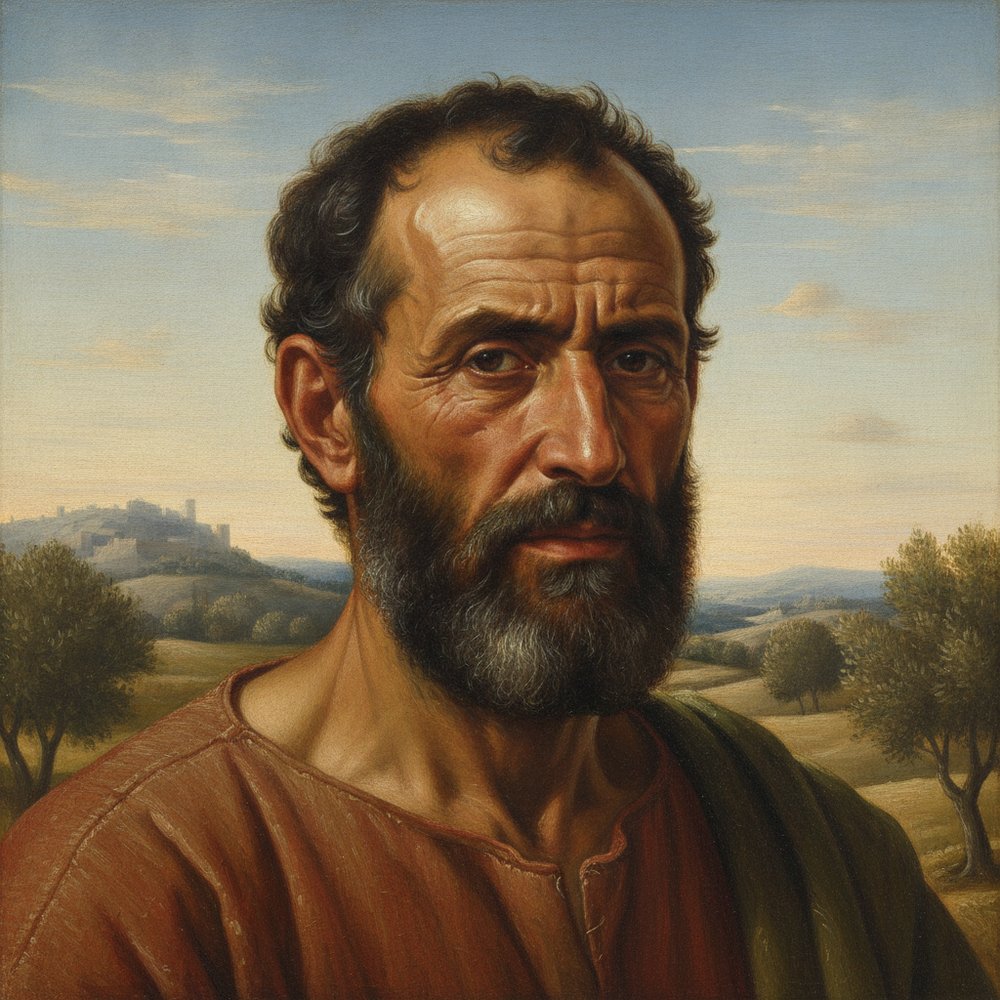
The messenger sent by the church at Philippi with a gift for the imprisoned Paul, whom Paul calls his brother, fellow worker and fellow soldier. He fell ill and nearly died — risking his life to complete their service — and was distressed that news of it had reached home. Paul sent him back with the letter, asking them to receive him with joy and to honour such men.
ScholarlyThe Greek name Epaphroditos (Ἐπαφρόδιτος) means 'charming,' 'handsome,' or 'favored by Aphrodite,' and was extremely common across the Greco-Roman world, borne by freedmen, soldiers, and public figures alike. Its frequency means no surviving inscription bearing it can be tied to Paul's associate.
Greek onomastics; the name derives from the goddess Aphrodite (cf. Latin equivalent Venustus).
But I have all things, and abound. I am filled, having received from Epaphroditus the things that came from you, a sweet-smelling fragrance, an acceptable and well-pleasing sacrifice to God.
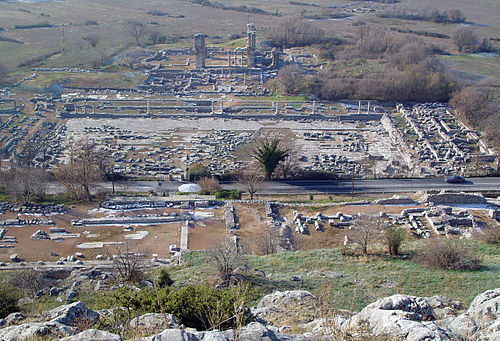
Born · Philippi(today Filippoi, Greece) Photo: No machine-readable author provided. Marsyas assumed (based on copyright claims). — CC BY-SA 3.0 (via Wikimedia Commons)
In art
Sosthenes, Apollo, Cephas, Tychicus, Epaphroditus, Cæsar and Onesiphorus of 70 disciples (Menologion of Basil II) · Authors of Menologion of Basil II (circa 985 AC, Constantinople), Byzantine manuscript illuminators[1]:
Pantoleon with Georgios, Michael the Younger, Michael of Blachernae, Symeon, Symeon of Blacherna — Public domain (via Wikimedia Commons)Twenty portraits of classical thinkers and physicians. Engra · John William Cook — CC BY 4.0 (via Wikimedia Commons)Жития Святых (1903-1911) - икона 04083 Епафродит и Кесарь · Unknown authorUnknown author — Public domain (via Wikimedia Commons)
We'd like to set analytics cookies to understand how the site is used.
They're off unless you agree. See our privacy page.