The Fall of Jerusalem
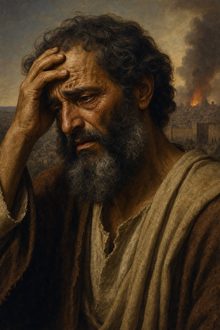
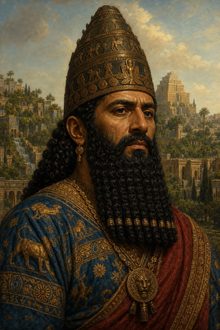
Zedekiah rebels against Babylon and the siege lasts about eighteen months, ending when famine breaks the city. He is caught fleeing towards the Jordan; his sons are killed in front of him, and then he is blinded and taken to Babylon in chains — the last thing he saw.
A month later the temple, the palace and every significant house are burned, the walls are pulled down, and the bronze pillars are broken up for scrap. The poorest of the land are left to work the vineyards.
Jeremiah had argued for surrender throughout and been imprisoned for it; the Babylonians release him and give him a choice of where to live. The book of Lamentations sits in the ruins and refuses to look away — how lonely sits the city that was full of people — and the exile becomes the defining catastrophe of the Hebrew scriptures.
Where in scripture
[1] In the ninth year of his reign, in the tenth month, in the tenth day of the month, Nebuchadnezzar king of Babylon came, he and all his army, against Jerusalem, and encamped against it; and they built forts against it around it. [2] So the city was besieged until the eleventh year of king Zedekiah. [3] On the ninth day of the fourth month, the famine was severe in the city, so that there was no bread for the people of the land. [4] Then a breach was made in the city, and all the men of war fled by night by the way of the gate between the two walls, which was by the king’s garden (now the Chaldeans were against the city around it); and the king went by the way of the Arabah. …
2 Kings 25:1–21 — opening verses
[15] Yahweh, the God of their fathers, sent to them by his messengers, rising up early and sending, because he had compassion on his people, and on his dwelling place; [16] but they mocked the messengers of God, and despised his words, and scoffed at his prophets, until Yahweh’s wrath arose against his people, until there was no remedy. [17] Therefore he brought on them the king of the Chaldeans, who killed their young men with the sword in the house of their sanctuary, and had no compassion on young man or virgin, old man or gray-headed. He gave them all into his hand. [18] All the vessels of God’s house, great and small, and the treasures of Yahweh’s house, and the treasures of the king, and of his princes, all these he brought to Babylon. …
2 Chronicles 36:15–21 — opening verses
[1] In the ninth year of Zedekiah king of Judah, in the tenth month, Nebuchadnezzar king of Babylon and all his army came against Jerusalem, and besieged it. [2] In the eleventh year of Zedekiah, in the fourth month, the ninth day of the month, a breach was made in the city. [3] All the princes of the king of Babylon came in, and sat in the middle gate, Nergal Sharezer, Samgarnebo, Sarsechim, Rabsaris, Nergal Sharezer, Rabmag, with all the rest of the princes of the king of Babylon. [4] When Zedekiah the king of Judah and all the men of war saw them, then they fled, and went out of the city by night, by the way of the king’s garden, through the gate between the two walls; and he went out toward the Arabah. …
Jeremiah 39:1–18 — opening verses
[1] How the city sits solitary, that was full of people! She has become as a widow, who was great among the nations! She who was a princess among the provinces has become a slave! [2] She weeps bitterly in the night. Her tears are on her cheeks. Among all her lovers she has no one to comfort her. All her friends have dealt treacherously with her. They have become her enemies. [3] Judah has gone into captivity because of affliction, and because of great servitude. She dwells among the nations. She finds no rest. All her persecutors overtook her within the straits. [4] The roads to Zion mourn, because no one comes to the solemn assembly. All her gates are desolate. Her priests sigh. Her virgins are afflicted, and she herself is in bitterness. …
Lamentations 1:1–22 — opening verses
Scripture quotations are from the World English Bible, a public-domain translation.