The Exodus from Egypt
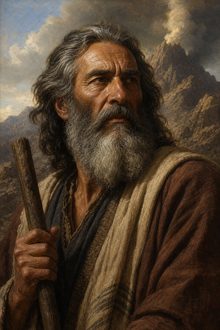
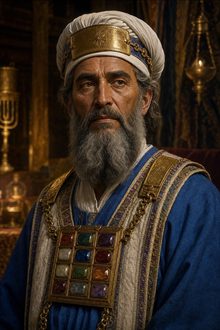
After the last plague Pharaoh summons Moses and Aaron by night and tells them to go, and the Egyptians urge them out, pressing silver, gold and clothing on them. The text gives the length of the stay as four hundred and thirty years to the day.
God does not take them by the coast road towards Philistia, the direct route, on the reasoning that facing war so soon would send them straight back to Egypt. They go the long way, towards the wilderness, carrying Joseph's bones as he had made them swear.
The Exodus becomes the reference point for everything after it. Israel's law repeatedly grounds its treatment of foreigners, slaves and the poor in the memory of having been slaves in Egypt, and Deuteronomy builds the retelling into family life: when your son asks what these laws mean, you begin by saying we were slaves.
Where in scripture
[31] He called for Moses and Aaron by night, and said, “Rise up, get out from among my people, both you and the children of Israel; and go, serve Yahweh, as you have said! [32] Take both your flocks and your herds, as you have said, and be gone; and bless me also!” [33] The Egyptians were urgent with the people, to send them out of the land in haste, for they said, “We are all dead men.” [34] The people took their dough before it was leavened, their kneading troughs being bound up in their clothes on their shoulders. [35] The children of Israel did according to the word of Moses; and they asked of the Egyptians jewels of silver, and jewels of gold, and clothing. …
Exodus 12:31–51 — opening verses
[17] When Pharaoh had let the people go, God didn’t lead them by the way of the land of the Philistines, although that was near; for God said, “Lest perhaps the people change their minds when they see war, and they return to Egypt”; [18] but God led the people around by the way of the wilderness by the Red Sea; and the children of Israel went up armed out of the land of Egypt. [19] Moses took the bones of Joseph with him, for he had made the children of Israel swear, saying, “God will surely visit you, and you shall carry up my bones away from here with you.” [20] They took their journey from Succoth, and encamped in Etham, in the edge of the wilderness. …
Exodus 13:17–22 — opening verses
[20] When your son asks you in time to come, saying, “What do the testimonies, the statutes, and the ordinances, which Yahweh our God has commanded you mean?” [21] then you shall tell your son, “We were Pharaoh’s slaves in Egypt. Yahweh brought us out of Egypt with a mighty hand; [22] and Yahweh showed great and awesome signs and wonders on Egypt, on Pharaoh, and on all his house, before our eyes; [23] and he brought us out from there, that he might bring us in, to give us the land which he swore to our fathers. [24] Yahweh commanded us to do all these statutes, to fear Yahweh our God, for our good always, that he might preserve us alive, as we are today. [25] It shall be righteousness to us, if we observe to do all this commandment before Yahweh our God, as he has commanded us.”
Deuteronomy 6:20–25
Scripture quotations are from the World English Bible, a public-domain translation.