The Crucifixion and Resurrection
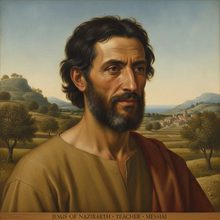
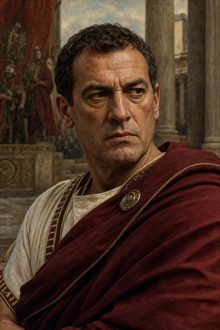
Crucifixion was a Roman punishment reserved for slaves, rebels and the provincial poor, designed to be public and slow. Simon of Cyrene is pressed into carrying the crossbeam; the charge fixed above Jesus' head names him king of the Jews, in three languages.
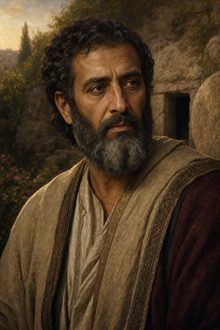
The Gospels record different words from the cross — forgiveness for the executioners, the promise to the criminal beside him, the cry of abandonment from Psalm 22, the care of his mother handed to a disciple. Joseph of Arimathea, a member of the council, asks Pilate for the body and buries it in his own new tomb before the sabbath begins.
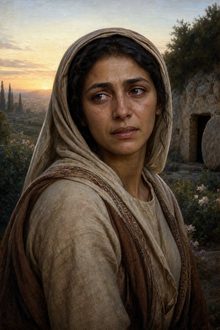
On the first day of the week the women who had watched the burial find the stone moved. That the first witnesses were women is notable precisely because their testimony carried little legal weight — no one inventing the account would have arranged it that way. Paul's list of appearances, written within about twenty-five years, is the earliest surviving statement of the claim.
Where in scripture
[32] As they came out, they found a man of Cyrene, Simon by name, and they compelled him to go with them, that he might carry his cross. [33] When they came to a place called “Golgotha”, that is to say, “The place of a skull,” [34] they gave him sour wine to drink mixed with gall. When he had tasted it, he would not drink. [35] When they had crucified him, they divided his clothing among them, casting lots, [36] and they sat and watched him there. [37] They set up over his head the accusation against him written, “THIS IS JESUS, THE KING OF THE JEWS.” [38] Then there were two robbers crucified with him, one on his right hand and one on the left. [39] Those who passed by blasphemed him, wagging their heads, …
Matthew 27:32–66 — opening verses
[1] Now after the Sabbath, as it began to dawn on the first day of the week, Mary Magdalene and the other Mary came to see the tomb. [2] Behold, there was a great earthquake, for an angel of the Lord descended from the sky, and came and rolled away the stone from the door, and sat on it. [3] His appearance was like lightning, and his clothing white as snow. [4] For fear of him, the guards shook, and became like dead men. [5] The angel answered the women, “Don’t be afraid, for I know that you seek Jesus, who has been crucified. [6] He is not here, for he has risen, just like he said. Come, see the place where the Lord was lying. [7] Go quickly and tell his disciples, ‘He has risen from the dead, and behold, he goes before you into Galilee; there you will see him.’ Behold, I have told you.” …
Matthew 28:1–20 — opening verses
[26] When they led him away, they grabbed one Simon of Cyrene, coming from the country, and laid on him the cross, to carry it after Jesus. [27] A great multitude of the people followed him, including women who also mourned and lamented him. [28] But Jesus, turning to them, said, “Daughters of Jerusalem, don’t weep for me, but weep for yourselves and for your children. [29] For behold, the days are coming in which they will say, ‘Blessed are the barren, the wombs that never bore, and the breasts that never nursed.’ [30] Then they will begin to tell the mountains, ‘Fall on us!’ and tell the hills, ‘Cover us.’ [31] For if they do these things in the green tree, what will be done in the dry?” [32] There were also others, two criminals, led with him to be put to death. …
Luke 23:26–56 — opening verses
[16] So then he delivered him to them to be crucified. So they took Jesus and led him away. [17] He went out, bearing his cross, to the place called “The Place of a Skull”, which is called in Hebrew, “Golgotha”, [18] where they crucified him, and with him two others, on either side one, and Jesus in the middle. [19] Pilate wrote a title also, and put it on the cross. There was written, “JESUS OF NAZARETH, THE KING OF THE JEWS.” [20] Therefore many of the Jews read this title, for the place where Jesus was crucified was near the city; and it was written in Hebrew, in Latin, and in Greek. [21] The chief priests of the Jews therefore said to Pilate, “Don’t write, ‘The King of the Jews,’ but, ‘he said, “I am King of the Jews.”’” [22] Pilate answered, “What I have written, I have written.” …
John 19:16–42 — opening verses
[1] Now on the first day of the week, Mary Magdalene went early, while it was still dark, to the tomb, and saw the stone taken away from the tomb. [2] Therefore she ran and came to Simon Peter, and to the other disciple whom Jesus loved, and said to them, “They have taken away the Lord out of the tomb, and we don’t know where they have laid him!” [3] Therefore Peter and the other disciple went out, and they went toward the tomb. [4] They both ran together. The other disciple outran Peter, and came to the tomb first. [5] Stooping and looking in, he saw the linen cloths lying, yet he didn’t enter in. [6] Then Simon Peter came, following him, and entered into the tomb. He saw the linen cloths lying, …
John 20:1–31 — opening verses
[1] Now I declare to you, brothers, the Good News which I preached to you, which also you received, in which you also stand, [2] by which also you are saved, if you hold firmly the word which I preached to you—unless you believed in vain. [3] For I delivered to you first of all that which I also received: that Christ died for our sins according to the Scriptures, [4] that he was buried, that he was raised on the third day according to the Scriptures, [5] and that he appeared to Cephas, then to the twelve. [6] Then he appeared to over five hundred brothers at once, most of whom remain until now, but some have also fallen asleep. [7] Then he appeared to James, then to all the apostles, [8] and last of all, as to the child born at the wrong time, he appeared to me also.
1 Corinthians 15:1–8
Scripture quotations are from the World English Bible, a public-domain translation.